
How to Search the Itasca County Court Docket
Start your Itasca County court docket search with Minnesota Court Records Online, or MCRO. Itasca cases sit inside the Minnesota District Court system there. Gather your best detail first. That may be a court file number, a citation number, or a party or business name. It could be an attorney name. A rough filing date works too. Narrow the search to Itasca County rather than the whole state. A filed case surfaces faster that way. What you get back is a public Register of Actions. It does not promise that every record or document is available online.
A pending criminal, traffic, or petty case can hide from a defendant-name search. Try the court file number, the citation number, or the attorney field instead. Once the blue case link opens, check the county, the parties, the category, the filing date, the events, and any hearings still ahead. Keep in mind that a case category is not an outcome. Read the newest Register of Actions entry. Check the disposition area too before you draw any conclusion about the case.
- Open MCRO Case Search and accept its public-access terms.
- Choose the search route that fits the information in hand, then select Itasca under court locations.
- Use the Criminal, Civil, Family, or Probate or Mental Health category when it is known.
- Open the matching blue case link and read the Register of Actions from the oldest event to the newest.
- Use Hearing Search for a date and Court Administration for a certified copy or a current confirmation.
Minnesota’s MCRO overview presents the public search service behind any Itasca County court docket lookup. Think of the remote record as a first layer, handy when you need to confirm a case detail or a court date fast.
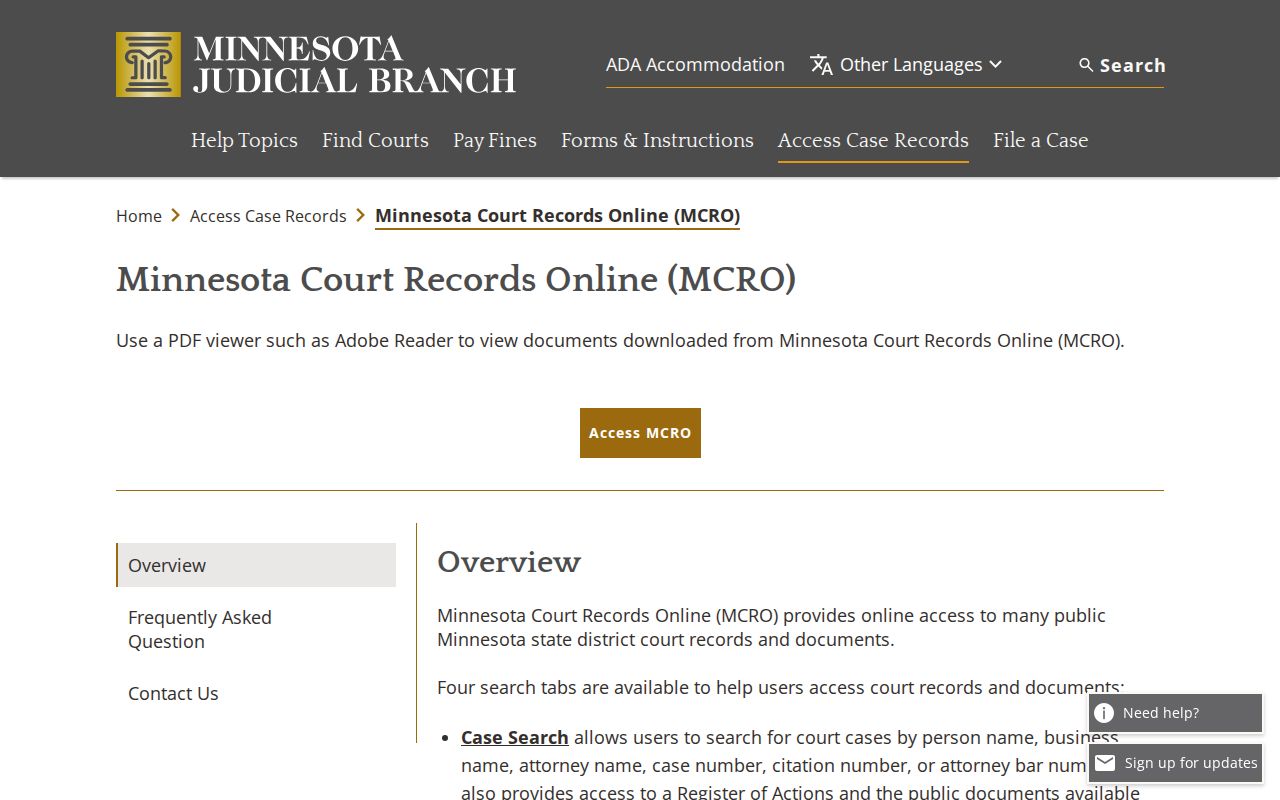
MCRO bundles case, document, hearing, and judgment searches into one place, while official certification stays with the court.
Itasca MCRO Docket Routes
Four public routes sit inside MCRO. Each one answers a different question about an Itasca County docket. Case Search opens Case Details plus the Register of Actions. Document Search takes a court file number. It returns eligible public documents. Hearing Search filters by name, file number, judicial officer, attorney, date, category, and Itasca location. Judgment Search covers docketed money judgments. Those are searched by debtor name and date or status. For fines, the county’s own balance instructions point to the criminal, traffic, and petty record category. Then they point to the Financial Information section of the Register of Actions.
| MCRO route | Best Itasca use | What it does not replace |
|---|---|---|
| Case Search | Case details, parties, events, and the Register of Actions | A certified court record |
| Document Search | Eligible public documents by full court file number | Documents outside the remote-access tier |
| Hearing Search | A case-specific setting by name, number, date, officer, or attorney | A complete public courtroom-session calendar |
| Judgment Search | Docketed money judgments and satisfactions | Every outcome in a civil or criminal Register of Actions |
Note: The county’s balance workflow has you select Itasca first, then open the case and scroll down to Financial Information.
What a Court Docket Shows
Think of the Itasca County Register of Actions as a court record in order. The opening lines carry the basics. They usually give the court file number, the case category, the filing date, the caption, the parties, and the attorneys. From there, entries track pleadings, orders, notices, hearings, disposition, sentence, or a civil judgment. Financial details can appear too. Assessed amounts, payments, restitution, or a collection reference all show up there. One caution applies. A document index number does not always mean a file is attached. Read the event line next to the separate document list.
| Case number | A unique MNCIS identifier. Itasca numbers begin with county code 31. |
|---|---|
| Caption and parties | The case title and the people or organizations formally involved. |
| Case events | Chronological filings, proceedings, notices, and court activity. |
| Hearings | Upcoming or recorded settings, subject to later changes. |
| Disposition | The recorded result, such as a judgment, dismissal, conviction, or other closure. |
| Financial information | Amounts, payments, balances, restitution, or collection-related entries when the record displays them. |
The MCRO FAQ lays out the main limits of public searching. Verify anything you see with the court itself, above all when a hearing or deadline is at stake.
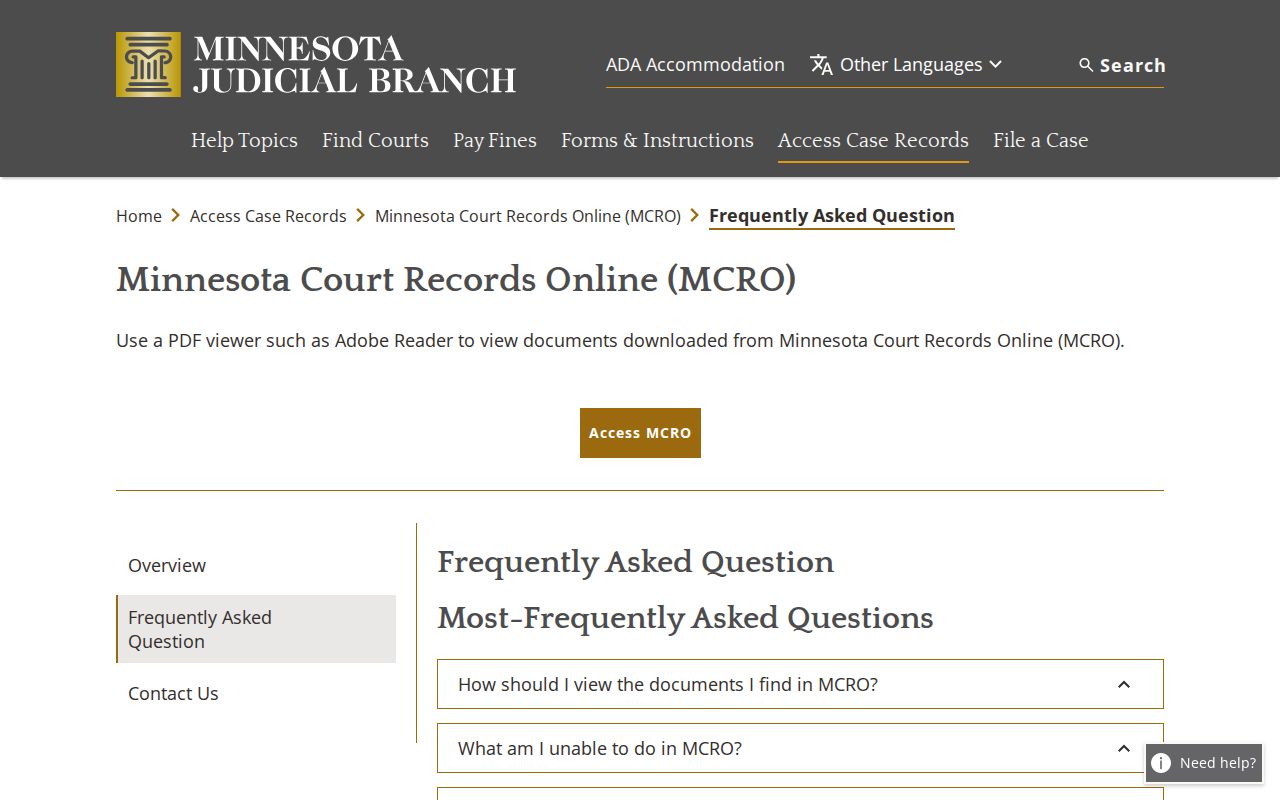
The FAQ draws a line worth remembering: the remote view helps, but the court’s certified record remains the official one.
Itasca County ROA Case Numbers
Itasca County’s two-digit court code is 31. Every Minnesota court file number carries a few parts. These include case-type letters, a two-digit filing year, and a sequence. You will see the pattern 31-CR-YY-##### on a mandatory-appearance criminal or traffic matter. You will see 31-VB-YY-##### on a payable, nonmandatory citation case. Whenever a court notice shows a full number, type it exactly as printed. One quirk from MCRO: spaces inside a case number cause an error. Enter the letters and hyphens with no spaces.
- ROA
- Register of Actions, Minnesota’s chronological list of filings, hearings, activity, and outcome in a case.
- CR
- An Itasca case type indicating a court appearance is required.
- VB
- An Itasca case type used for a payable or nonmandatory citation case.
- Citation number
- A separate number, usually 12 digits, found on a standard Minnesota citation before a court file number is created.
Itasca County’s fine and ticket instructions tell searchers to put 31 in front of a case-number search. That local tip saves time when a notice shows only the tail end of the number.
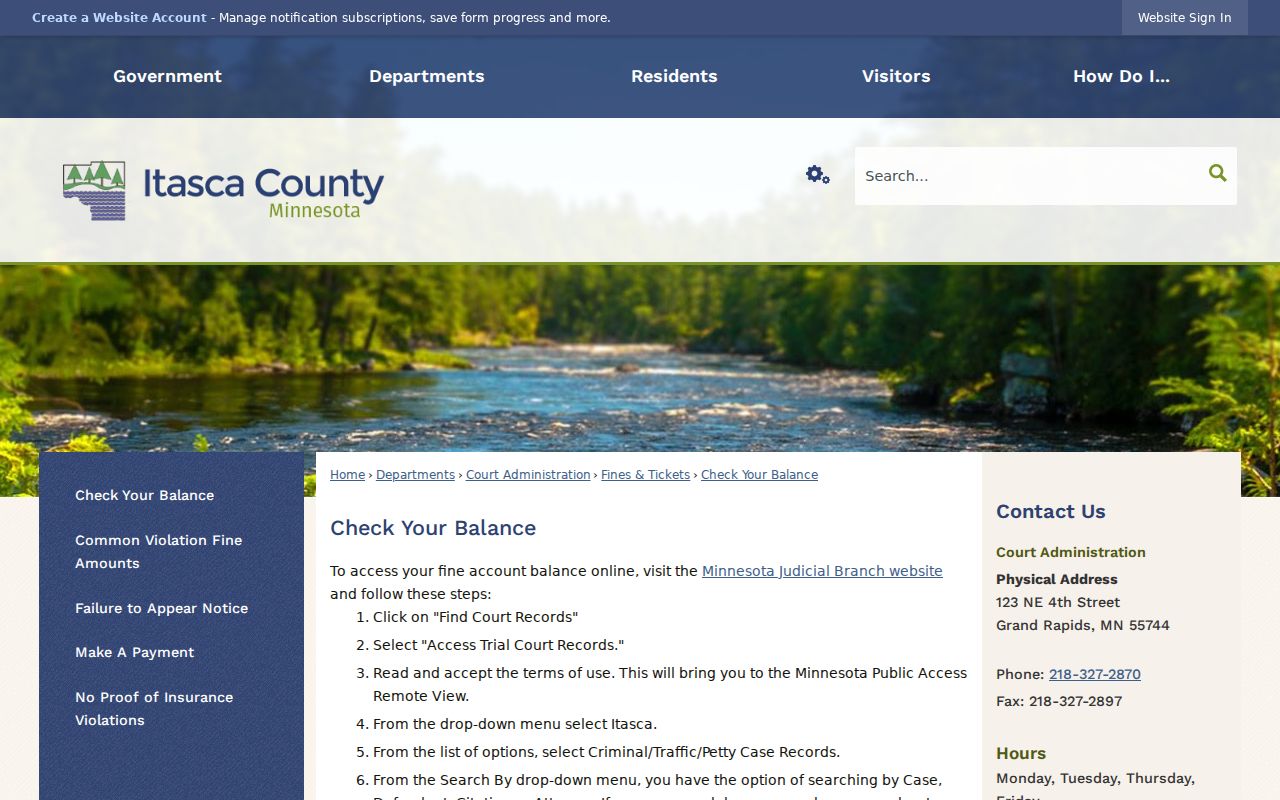
The county workflow treats the Register of Actions as the home of an official court balance. No separate city ticket docket exists for this step.
Which Courts Keep Dockets
Minnesota runs one unified trial-court system. Within Itasca County, the Minnesota District Court at Grand Rapids hears criminal, traffic, civil, family, probate, juvenile, conciliation, and small-claims matters filed locally. Court Administration keeps the Register of Actions and the court files as the county’s custodian. Appeals go elsewhere. A District Court case that gets appealed lands in the Minnesota Court of Appeals under a separate appellate docket. Leech Lake Tribal Court stands apart as its own system, though the Itasca Wellness Court shares a joint-jurisdiction relationship with the Leech Lake Band of Ojibwe.
| Court or custodian | Docket covers | Where to start |
|---|---|---|
| Itasca County District Court | County civil, criminal, traffic, family, probate, juvenile, and conciliation matters | MCRO, the courthouse terminal, or Court Administration |
| Minnesota Court of Appeals | Appeals from a District Court order or judgment | The appellate public-record system and the trial ROA |
| Leech Lake Tribal Court | Separate tribal-court matters | The tribal court’s own channels, not an assumed MCRO result |
| Sheriff’s Records Division | Incident, arrest, accident, and related law-enforcement records | The Sheriff’s records process, not the court ROA |
The official Itasca District Court page names the unified local court and lists its public access details. Once a city citation turns into a filed case, this is the right court destination.
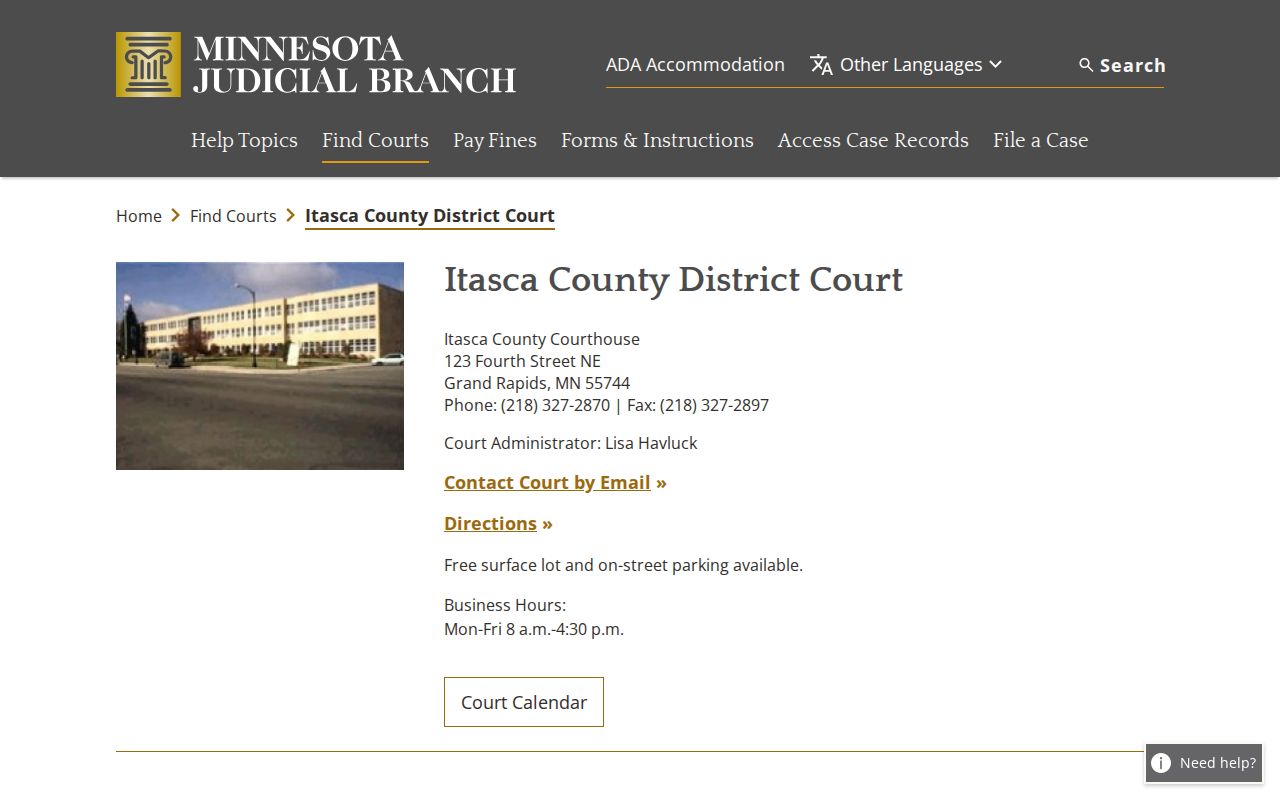
That court page ties the Itasca County docket to the statewide Judicial Branch. There is no separate county clerk system behind it.
Itasca County Courthouse Terminals
MCRO from home is just the first tier. Every Minnesota district courthouse also has a public access terminal. It is called MPA Courthouse or MNPAC, and it holds statewide public case records. That courthouse view can show more than the remote view. This matters when a public record never made it online. For Itasca County, the terminal sits in the courthouse at 123 Fourth Street NE in Grand Rapids. Court Administration can pull an older paper file, a Register of Actions view, or a plain or certified copy.
The terminal also backs you up when an online result looks thin. Bring a case number if you have one. A citation number, party name, or filing year helps staff track down traffic and criminal files. Some files sit in off-site storage. They may not be ready the same day. The published court page notes free surface and on-street parking. It names no records-counter room, no security procedure, and no copy-request deadline. So call ahead before making the trip.
The Judicial Branch access overview lays out the public-terminal layer next to remote access. It helps when an Itasca County docket leaves public material off the online tier.
The statewide access page shows the three-layer path: remote MCRO first, then the public terminal, then the local Court Administration counter.
Finding Court Dates and Settings
Three checks cover an Itasca County docket hearing. These are the case's Register of Actions, MCRO Hearing Search, and the Itasca Weekly Public Court Calendar. Hearing Search filters by party or business, court file number, attorney, judicial officer, and county. Date and case category can also narrow the results. The weekly calendar is a searchable PDF that works on a computer or phone. A court notice still comes first for a required appearance. It carries the court's direct instruction for that case.
Always compare the newest Register of Actions event against the latest calendar entry. A listing on the public calendar is not guaranteed. Confidential and nonremotely accessible matters are left off it. A same-day hearing can also linger under Upcoming Hearings in MCRO after it has already happened or moved. Full date steps, setting fields, and the confirmation sequence are on the Itasca County court calendar.
Itasca County Calendar Updates
The Itasca Weekly Public Court Calendar goes up at 7:00 a.m. on business days. It gets refreshed hourly. Judges, rooms, and settings can still change, the court warns. Printed calendars in the courthouse lobbies or outside courtrooms are the most current daily version. For a setting that matters, run the court file number through Hearing Search. Review the Register of Actions. Check the latest weekly calendar. Call Court Administration at 218-327-2870 if anything conflicts or the case is missing.
MCRO Hearing Search is built around one case at a time. It does not show the full county session view. Government users get that through MPARC. That gap is why an Itasca County calendar search may take several filters. It is not one courtroom schedule. The court page links remote-hearing resources, though no standing local video link is posted. For a hearing connection, rely on the case notice or Court Administration.
The MCRO public-access FAQ explains the official remote layer and its limits, including the need to confirm a material Itasca hearing through the current court record.
MCRO's public guidance says a remote calendar entry can change. It may also leave out protected court matters.
Public Access to Dockets
Public access in Itasca County flows from Minnesota's court-record rules. A county public-records portal is not the source. Court records are generally open during regular office hours unless a rule, statute, or order restricts them. Rule 8 defines the Register of Actions and public calendar access. It also limits how restricted identifiers and certain case types appear remotely. MCRO serves the public Register of Actions and eligible documents for free. The remote record stays unofficial. Court Administration handles the official copy path.
Key Rules:
Minnesota Rule of Public Access 2 presumes court records are open during regular office hours unless an exception applies.
Minnesota Rule of Public Access 4 identifies categories of case records that are not public without authorized access.
Minnesota Rule of Public Access 8 governs Registers of Actions, calendars, public terminals, and remote-access limits.
Minnesota Government Data Practices Act, Minn. Stat. §13.03 provides inspection and copy rules for public government data.
Remote access hides identifiers. These include Social Security numbers, account numbers, phone numbers, and most street addresses. Family, juvenile, child-protection, domestic-abuse, harassment, civil-commitment, sealed, and expunged material faces added limits. An agency incident record is not the later court docket. Use the Sheriff's Records Division for law-enforcement material. Court Administration handles the Register of Actions.
The MCRO public-access FAQ describes the online layer and its limits. A missing result never proves that a case, court date, or court record does not exist.
When MCRO Misses an Itasca Docket
A missing result in a remote docket search usually has a simple cause. Pending criminal, traffic, and petty matters without a conviction may not return through a defendant-name search. A new citation can take up to seven days to process. Sometimes the search itself is off. It may be drawn to the wrong county, a case number without 31, or a stray space. Confidential, sealed, expunged, juvenile, and other limited-access cases stay out of view. Older files may be paper, archived, or no longer retained.
Work down a short fallback chain. Retry with the case number, citation, attorney, or the correct party name. Select Itasca and the right category. The courthouse public terminal offers a broader public view of the court docket. For a public-file or copy question, call Court Administration at the courthouse. A confidential record may require identity verification. A sealed record goes through the court's access process. That includes the CON101 request described in the statewide CON100 instructions. It is not a promise that any search can reveal it. An empty result can mean a search limit, restriction, filing delay, archive, or wrong identifier, not a cancelled or nonexistent case.
The Clerk and Docket Records
Minnesota gives this work to one office. Itasca County Court Administration, also called the District Court Administrator, holds the trial-court records rather than a separate district clerk. The office maintains the District Court Register of Actions. It also holds the case files for civil, family, probate, juvenile, criminal, and traffic matters. That administrative office became a state office in 2000. This is why public case access runs through the Minnesota Judicial Branch and MNCIS instead of a county recorder or city clerk.
Itasca County Court Administration
Itasca County Courthouse
123 Fourth Street NE
Grand Rapids, MN 55744
218-327-2870
Monday through Friday, 8:00 a.m. to 4:30 p.m.; the county page lists Wednesday opening at 8:30 a.m.
When you request a copy, include the case number or filing year. Also give the party or caption, the exact document, quantity, copy type, delivery method, and your contact information. A letter or the statewide form works fine. Plain copies are generally free. A certified copy runs $14 per document. A combined certified and exemplified copy is $28. Order a transcript through the court reporter, not the copy counter. The county Court Administration page names the local office that handles the Itasca County docket and court-file access. It is the contact point for older files, certification, collections noted in a Register of Actions, and case-specific court questions.
That office page puts docket help with Court Administration. It does not route records through the Sheriff's process or a city contact.
Itasca Courthouse Record History
Older Itasca County docket research runs into real buildings. A small frame courthouse went up near the Mississippi River in 1891. A two-story brick courthouse followed in 1894. Unstable ground at the old site and later fire-safety worries led voters to approve a replacement bond after World War II. The present courthouse opened in 1951. Additions came in 1969 and 1978, with a connected law-enforcement center project beginning in 1982.
None of that history tells you the status of any file. It does explain why an older matter may not be fully electronic. A court records request might therefore involve a paper or off-site file. MCRO document access before July 1, 2015 is limited in several categories. When a historic Register of Actions or document is missing online, use the courthouse terminal and Court Administration. Bring enough identifying detail for staff to locate the right file. The Itasca courthouse history records the building changes behind this archive issue. But it is no substitute for a file search. It does not confirm that any named record survived.
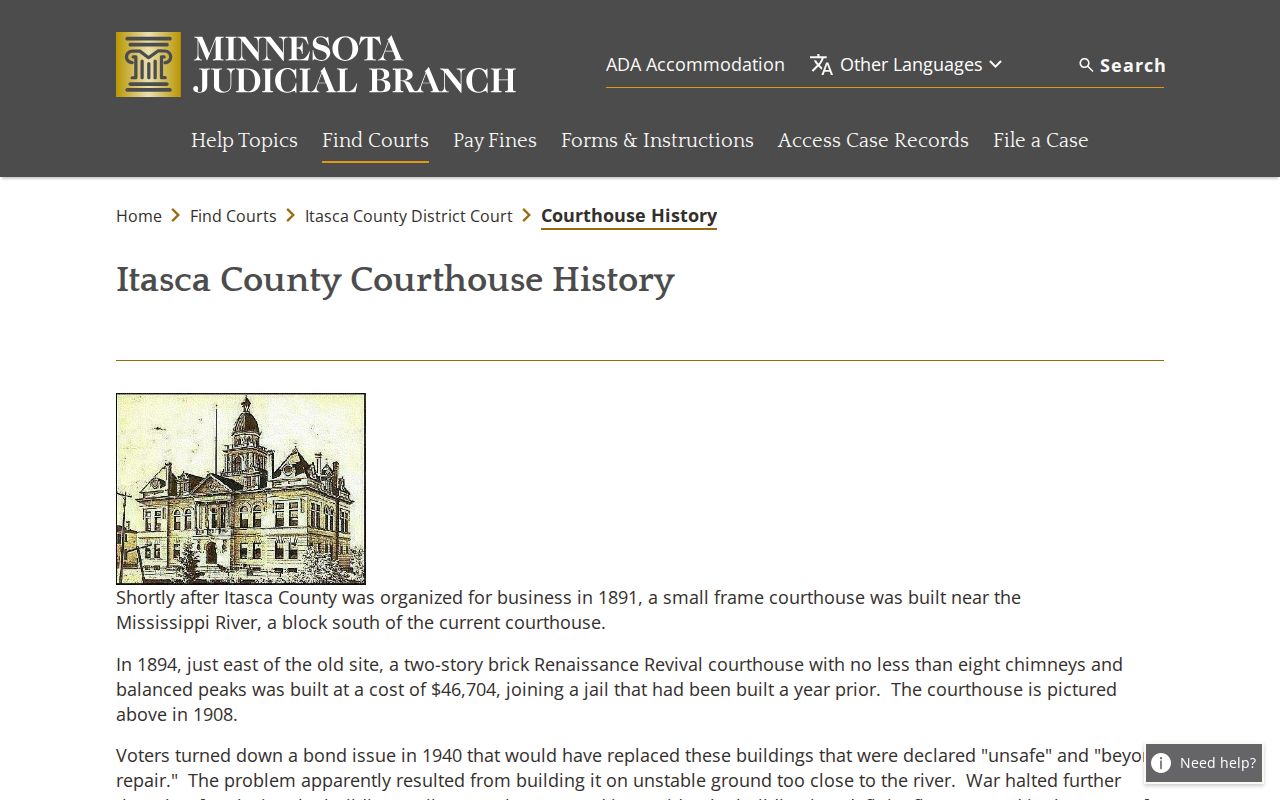
That building record frames the modern shift from paper files to MNCIS, MCRO, and public-terminal access.
Court Dockets by City in Itasca County
Itasca County's five largest incorporated places are Grand Rapids, Coleraine, Nashwauk, Deer River, and Bovey, per 2020 Census figures. Official city materials offer civic contacts, ordinances, and local agency information, but none of these communities runs a separate public municipal-court docket portal. When a city citation becomes a court case, the case number, Register of Actions, hearing, and certified-copy path all lead to Itasca County District Court and Court Administration.
Grand Rapids Court Docket
Population 11,126. The county seat is also the court’s physical location and public-terminal destination.
Coleraine Court Docket
Population 2,006. City and police contacts differ from the District Court record custodian.
Nashwauk Court Docket
Population 970. An ordinance source can explain a rule, but it is not the Register of Actions.
Deer River Court Docket
Population 909. A citation or case number routes the court lookup to Itasca District Court.
Bovey Court Docket
Population 829. City civic contacts and the court-file path remain distinct.
Itasca County's government home page works well as a civic directory for county departments. It is not the District Court case search or the Court Administration copy process.
The county directory rounds out the local picture behind the five city docket routes. No city office serves as a court custodian.
Itasca Wellness Court Dockets
Itasca County runs an official Wellness Court. It is a joint project of the county, the Ninth Judicial District, and the Leech Lake Band of Ojibwe. It opened in 2007. Participants get treatment, testing, probation, and regular check-ins with a judge. The partnership with Leech Lake is unusual. But it has a limit worth knowing. Tribal court files do not merge into an Itasca County District Court search. Do not assume a tribal case will show up in MCRO.
If a matter is remotely accessible, Wellness Court review hearings may appear under the underlying criminal case number. The court posts no separate public Wellness Court docket or calendar. A docket entry alone does not reveal protected treatment details. So resist reading between the lines. Pull the Register of Actions for the underlying case first. Then confirm any hearing date through the regular District Court channels. The program's multi-step requirements apply only to participants. They are not general docket codes.
For context, Minnesota's treatment-court county information describes the local program. That page is helpful background when an Itasca County docket mentions a review hearing. It is no substitute for the case record itself.
Map and Directions to the Itasca County Courthouse
District Court civil, family, probate, juvenile, criminal, and traffic files are kept by Court Administration at the Itasca County Courthouse, 123 Fourth Street NE, in Grand Rapids. The 1951 building, expanded with added floors in 1969 and 1978, houses the courthouse public-access terminal, which shows more public case records than the remote MCRO lookup. Court Administration's counter routes calendar, certified-copy, and older paper-file questions.
Itasca County Court Administration
Itasca County Courthouse
123 Fourth Street NE
Grand Rapids, MN 55744
218-327-2870
Monday, Tuesday, Thursday and Friday, 8:00 a.m. to 4:30 p.m.; Wednesday, 8:30 a.m. to 4:30 p.m.
The Judicial Branch court page lists a free surface lot and on-street parking, but no published security-screening or ADA-entrance detail was found, so call Court Administration ahead of a records trip to confirm current entry procedures and terminal availability.